
For years, Australia's solar rebate conversation was largely focused on homeowners, and this is why we currently have the largest uptake of residential solar in the world.
But from 1 October 2026, a significant change to the federal Small-scale Renewable Energy Scheme (SRES) is set to open up new opportunities for commercial and industrial operators across Melbourne.
The existing SRES framework has generally been associated with smaller solar systems, with the previous eligibility limit sitting at 100 kilowatts (kW).
The federal government's planned expansion will increase that threshold to 1 megawatt (MW), allowing many more commercial and industrial solar projects to access Small-scale Technology Certificates (STCs).
From warehouses and factories to retail premises, offices, farms, workshops and other energy-intensive facilities, this could substantially improve the financial case for installing solar.
If your business has a large, suitable rooftop, understanding what is changing, how the rebate works and what you can do before the new rules take effect. Let’s take a look.
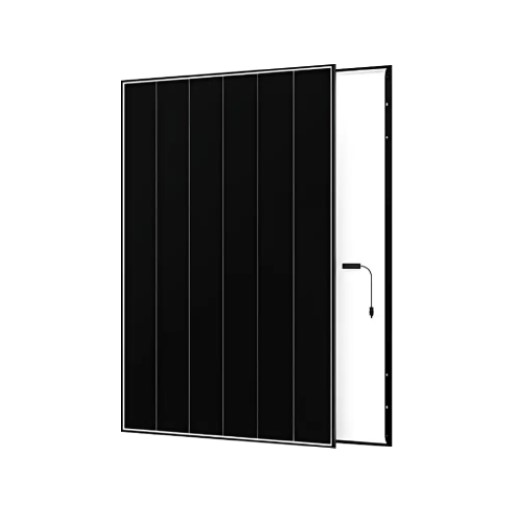
The key change is simple yet significant: the SRES eligibility threshold is being expanded from 100kW to 1MW, subject to the required regulatory processes.
Previously, a business owner looking to install a 150kW, 250kW or 500kW solar system could fall into an awkward gap. The system was too large for the SRES and anything smaller didn't make practical or financial sense under the alternative large-scale renewable energy framework (LRET).
The expansion is designed to remove that barrier. From 1 October, eligible commercial solar systems up to 1MW will be able to access STCs under the expanded SRES. The certificates provide an upfront financial incentive that can be incorporated into the cost of an eligible solar installation.
For businesses considering installing commercial solar panels in Melbourne, this means larger systems may become significantly more attractive from an upfront-cost perspective.
Melbourne is home to thousands of commercial properties with large rooftops that can potentially be used for solar generation.
Warehouses, manufacturing facilities, shopping centres, agricultural buildings and industrial premises often have substantially higher electricity consumption than an average home. Many of these buildings also have large areas of relatively unobstructed roof space.
This creates the perfect opportunity for your business to install solar panels on that space to generate electricity where it is being consumed. The financial incentive makes even more sense for businesses that do most of their work during the day.
Solar generation can offset electricity purchased from the grid at the same time the business is using power for lighting, refrigeration, machinery, air conditioning, computers and other equipment.
The expanded rebate could make it possible for more businesses to install systems large enough to meaningfully reduce their electricity purchases.
The exact value of the incentive will depend on factors including the size and eligibility of the system, certificate values, installation costs and the applicable rules at the time of installation.
Government estimates suggest the expansion could reduce installation costs by around 20% for eligible projects.
The figures outlined with the announcement indicate that a 250kW system could receive an upfront reduction of approximately $68,000, while an 850kW system could potentially receive an incentive closer to $230,000.
Energy bill savings are additional to the upfront incentive. However, businesses should not assume that every project will deliver identical savings. The financial return depends on electricity consumption, tariffs, solar generation, system size, export limitations, operating hours and the property's network connection.
A professional assessment from the team at Jet Solar is essential before deciding how large a system you need to install.
Solar panels are only one part of the renewable energy equation. For businesses that generate substantial solar power during the day, adding battery storage can provide another way to improve the value of the system.
Commercial battery storage allows businesses to store surplus electricity generated by their solar panels and use it later when electricity demand is higher or solar generation has fallen.
This is very useful for businesses with evening operations or facilities that have significant electricity demand outside peak solar-generation hours.
For business owners considering commercial solar batteries in Melbourne, the right battery size should be determined by the site's electricity consumption, solar generation profile, available space and the business's operational requirements.
The aim isn't necessarily to install the biggest battery possible. Instead, the system should be designed around how much energy the business actually uses.
Solar Batteries for business can provide several potential benefits beyond storing excess solar power.
Depending on the system and electricity tariff, battery storage may help a business:
Business owners who are considering solar battery storage in Melbourne should look at the entire energy profile of the site rather than purchasing a battery as a standalone product.
The best system often comes from designing solar generation and battery storage together.
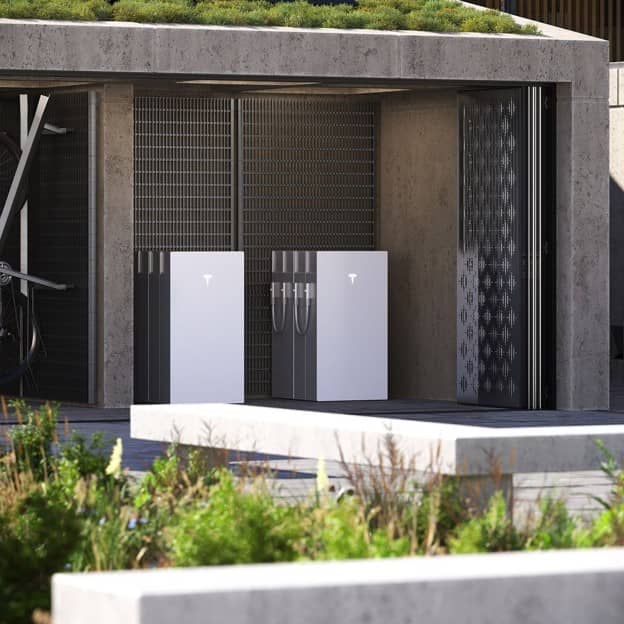
This is an important distinction for businesses.
The expansion discussed for 1 October 2026 relates to the eligibility of solar systems under the SRES and the availability of STCs. Businesses should not automatically assume that a commercial battery will receive the same incentive as the solar panels.
Battery incentives have their own eligibility requirements and programs, which can change over time.
If you're searching for a Solar Battery Rebate in Melbourne, it is worth getting advice specific to your project rather than relying on residential rebate information found online.
For a commercial property, the financial assessment should consider the solar incentive, battery incentives where applicable, installation costs, energy savings and the expected operating life of the system.
One of the biggest mistakes a business owner can make is choosing a system based purely on available roof space.
A large roof does not automatically mean that installing the biggest possible solar capacity is the best financial decision.
A proper commercial solar assessment will consider your business’s:
For some businesses, a 150kW system may be ideal for their roof size, while larger buildings will benefit from a 300kW, 500kW or more.
The expanded 1MW threshold gives businesses more flexibility, but it does not mean every business needs to install a 1MW system. The team at Jet Solar will assess your roof with your business energy consumption to help you find the right solar system.
If your business is considering solar, waiting until 1 October to start the process may not be the best strategy.
Commercial solar projects can take time to design and approve. Larger installations may require additional engineering, network applications, structural assessments and electrical work.
The network connection process can also become a significant part of the project timeline.
The federal announcement has highlighted concerns around delays in commercial connection approvals and called for the Australian Energy Market Commission to review the existing process.
For businesses, this reinforces an important point: the rebate may become available on 1 October, but that doesn't necessarily mean a project can be designed, approved and installed overnight.
Getting an assessment underway early can give you more time to understand the site's options and prepare the required documentation.
Commercial solar is different from installing a small residential system. A commercial installation may involve larger electrical infrastructure, more complex roof access, structural considerations, network requirements and significantly higher energy loads.
That makes choosing an experienced installer important. If you're comparing commercial solar installers in Melbourne, look for a company that can assess the entire project rather than simply quote a panel price.
A good commercial solar provider will be able to discuss system design, energy consumption, battery storage, network requirements, monitoring and long-term performance.
At Jet Solar, our focus is on designing solar and battery solutions around the individual requirements of the business. We manage the full process including system design, installation, integration with existing solar systems and commissioning.
The 1 October 2026 SRES expansion could be a significant opportunity for Melbourne businesses that have previously been unable to access the small-scale solar incentive because their proposed system was larger than 100kW.
At Jet Solar, we can assess your property's solar potential, review your energy usage and help determine whether commercial solar panels are the right fit for your operation. We can also assess whether commercial solar batteries or commercial battery storage could further improve your energy strategy.
Whether you're looking for solar installers in Richmond, Mitcham, Toorak or Mount Eliza, the team at Jet Solar can help you take the next step towards a more efficient and potentially lower-cost energy future.
To get a quote for your business, call us today on 1300 166 107 or book online. We install commercial battery systems across Melbourne and regional Victoria for warehouses, offices, retail sites, and industrial facilities.